


Let's get lost again: Low Down and Mike Nichols
By Dennis Hartley
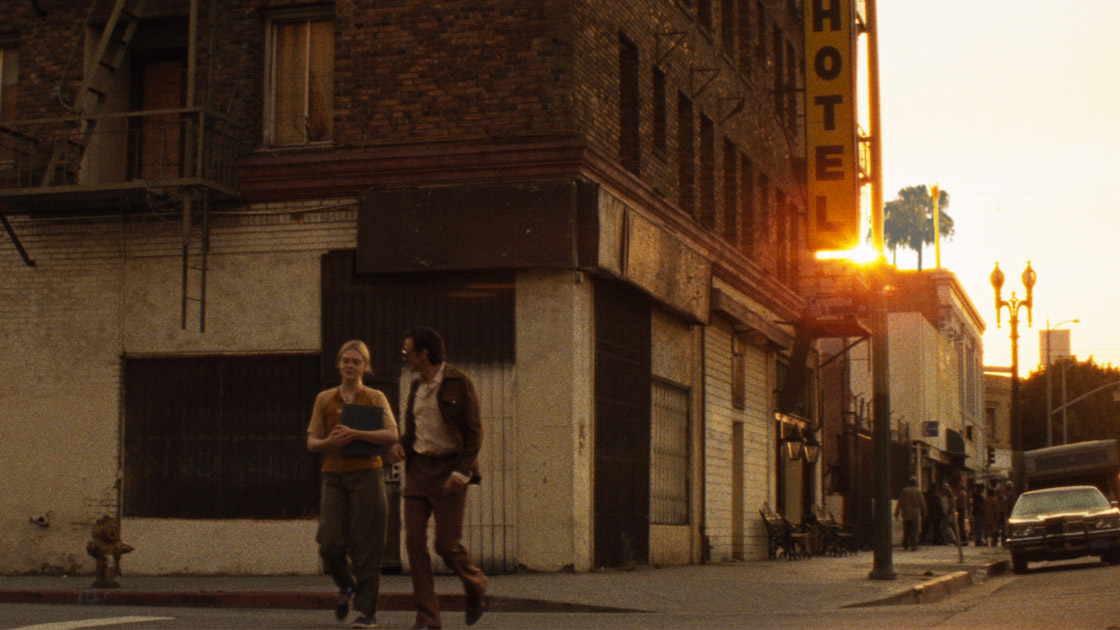
I will admit being unfamiliar with jazz pianist Joe Albany prior to watching Jeff Preiss' fact-based drama Low Down, yet the late musician's career trajectory seems depressingly familiar. Credited as a be-bop pioneer, he made his bones in the 1940s, accompanying the likes of Charlie Parker and Miles Davis. Unfortunately, he suffered an early "lost period" due to a heroin addiction, and spent most of the 50s and 60s chasing the dragon and collecting ex-wives. He came out of seclusion in the 70s, recording a number of albums through the decade (still battling smack). He died alone, in 1988. Oddly enough, that was the same year trumpeter Chet Baker died. Baker, whose career was beset by similar woes, was profiled in Bruce Weber's outstanding 1988 documentary Let's Get Lost. One of its most compelling elements was the moody, noirish cinematography...by a Mr. Jeff Preiss.
Preiss' film (which marks his feature-length directing debut) covers a 3-year period of Albany's life in the mid-70s, when he was living in a seedy Hollywood flophouse with his teenage daughter Amy (Elle Fanning). Albany (John Hawkes) is struggling to stay focused on the work, jamming with his trumpet-playing buddy Hobbs (Red Hot Chili Peppers bassist Flea, giving us a taste of his first instrument). Amy is cheerleading for her Dad, doing her best to keep him on track. Speaking of tracks, a surprise visit from his parole officer reveals Dad isn't quite holding things together, and he's whisked off to stir. Amy goes to stay with her grandmother (Glenn Close) until Joe is released. Dad still has issues. Amy tries to keep sunny, but it's tough to be Pollyanna when your social circle is surging with hookers, junkies, drug dealers and, er, porno star dwarves (Peter Dinklage!).
The screenplay (by Amy Albany and Topper Lilien) is based on Albany's memoir recounting life with her father. Albany's recollections about the extended family of eccentrics she encountered during this period inject the film with a Tales Of The City
 vibe at times. The naturalistic performances and Preiss' cinema verite approach also recalls Jerry Schatzberg's 1971 drama, Panic in Needle Park, a gritty, episodic character study about a community of junkies. Some may find the deliberate pacing stupefying, waiting for something to "happen", but as John Lennon once sang, "life is just what happens to you, while you're busy making other plans." Taken as a slice of life, Low Down just lets it happen...improvising on grace notes while keeping it all in perfect time.
...and one more thing
 |
| Mike Nichols 1931-2014 |
Mike Nichols passed away earlier this week. Perhaps more than any other film director I can think of, his catalog (stretching from 1966 to 2007) encapsulates the crucial paradigm shifts in America's social mores (and to some extent, changes in the political landscape) over the past 50 years. I would also consider him one of the progenitors of the modern film "dramedy", which stemmed from his background in improvisational comedy (he was one of the key players in an early 60s troupe that would later morph into Second City) and in later years, his experience as a theater director. He was, in all senses of the term, an "actor's director", clearly evident from the iconic performances that he coaxed from the likes of Elizabeth Taylor, Richard Burton, Dustin Hoffman, Anne Bancroft, Meryl Streep and Jack Nicholson. I don’t think he ever made what I would consider a “bad” film, which makes it difficult to narrow down favorites…but I’ll highlight my top three:
Who's Afraid of Virginia Woolf?
 - If words were needles, university history professor George (Richard Burton) and his wife Martha (Elizabeth Taylor) would look like a pair of porcupines, because after years of shrill, shrieking matrimony, these two have become maestros of the barbed insult, and the poster children for the old axiom, “you only hurt the one you love”. Nichols’ 1966 directing debut (adapted by scripter Ernest Lehman from Edward Albee’s Tony-winning stage play) gives us a peek into one night in the life of this battle-scarred middle-aged couple (which is more than enough, thank you very much). After a faculty party, George and Martha invite a young newlywed couple (George Segal and Sandy Dennis) over for a nightcap. It turns out to be quite an eye-opener for the young ‘uns; as the ever-flowing alcohol kicks in, the evening becomes a veritable primer in bad human behavior. It’s basically a four-person play, but these are all fine actors, and the writing is the real star of this piece. Everyone in the cast is fabulous, but Taylor is the particular standout; this was a breakthrough performance for her in the sense that she proved beyond a doubt that she was more than just a pretty face. It’s easy to forget that the actress behind this blowsy, 50-ish character was only 34 (and, of course, a genuine stunner). When “Martha” says “Look, sweetheart. I can drink you under any goddam table you want…so don’t worry about me,” you don’t doubt that she really can.
The Graduate
 - "Aw gee, Mrs. Robinson." It could be argued that those were the four words in this 1967 Nichols classic that made Dustin Hoffman a star. With hindsight being 20/20, it's impossible to imagine any other actor in the role of hapless college grad Benjamin Braddock...even if Hoffman (30 at the time) was a bit long in the tooth to be playing a 21 year-old character. Poor Benjamin just wants to take a nice summer breather before facing adult responsibilities, but his pushy parents would rather he focus on career advancement immediately, if not sooner. Little do his parents realize that in their enthusiasm, they've inadvertently pushed their son right into the sack with randy Mrs. Robinson (Anne Bancroft), wife of his Dad's business partner (and the original cougar!). Things get more complicated after Benjamin meets his lover's daughter (Katharine Ross). This is one of those "perfect storm" artistic collaborations: Nichols' skilled direction, Calder Willingham and Buck Henry's droll screenplay, fantastic performances from the entire cast, and one of the best soundtracks ever (by Simon and Garfunkel). Some of the 60s trappings haven't dated well, but the incisive social satire has retained its sharp teeth.
Silkwood
 - The tagline for this 1983 film was intriguing: “On November 13th, 1974, Karen Silkwood, an employee of a nuclear facility, left to meet with a reporter from the New York Times. She never got there.” One might expect a riveting conspiracy thriller to ensue; however what director Nichols and screenwriters Nora Ephron and Alice Arden do deliver is an absorbing character study of an ordinary working-class woman who performed an act of extraordinary courage which may (or may not) have led to her untimely demise. Meryl Streep gives a typically immersive portrayal of Silkwood, who worked as a chemical tech at an Oklahoma facility that manufactured plutonium pellets for nuclear reactor fuel rods. On behalf of her union (and based on her own observations) Silkwood testified before the AEC in 1974 about ongoing health and safety concerns at her plant. Shortly afterwards, she tested positive for an unusually high level of plutonium contamination. Silkwood alleged malicious payback from her employers, while they countered that she had engineered the scenario herself. Later that year, on the last night of her life, she was in fact on her way to meeting with a Times reporter, armed with documentation to back her claims, when she was killed after her car ran off the road. Nichols stays neutral on the conspiratorial whisperings; but still delivers the goods here, thanks in no small part to his exemplary cast, including Kurt Russell (as Silkwood’s husband), and Cher (who garnered critical raves and a Golden Globe) as their housemate.
Also recommended: Catch-22, Carnal Knowledge, The Day of the Dolphin, Working Girl, Primary Colors, Angels in America, Charlie Wilson’s War (my original review).
Previous posts with related themes:
Angel-headed hipsters on celluloid: Top 5 Jazz Movies
Saturday Night at the Movies review archives


0 comments:
Post a Comment